
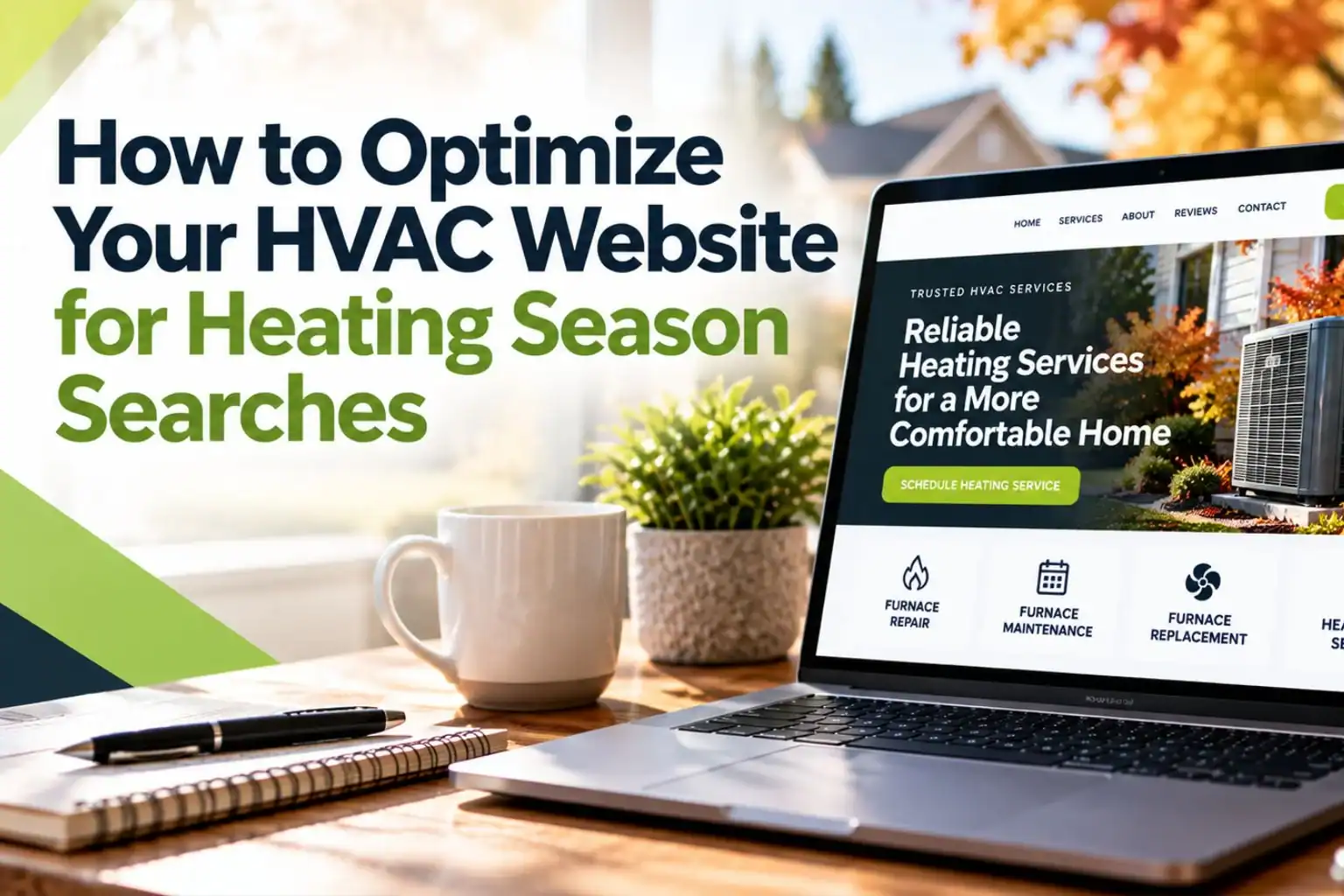
When temperatures begin to drop, homeowners start thinking about furnaces, heat pumps, heating maintenance, and whether their HVAC system is ready for colder weather. For HVAC contractors, that shift in homeowner behavior creates an important opportunity.
Your website should make it easy for homeowners and search engines to understand exactly what heating services you provide, where you provide them, and why someone should choose your company.
A well-optimized HVAC website can help your business appear when homeowners search for services such as furnace repair, heating maintenance, heat pump service, HVAC repair, and heating system replacement in their area.
Here are practical ways HVAC contractors can prepare their websites for heating season searches.
1. Make Your Heating Services Easy to Find
One of the first things to review is your website structure.
If heating services are buried within a general HVAC page, search engines and potential customers may have a harder time determining exactly what you offer. Dedicated service pages can provide more useful information while targeting specific searches.
Depending on your services, your website might include pages for:
- Furnace repair
- Furnace maintenance
- Furnace installation and replacement
- Heat pump repair
- Heat pump maintenance
- Heat pump installation
- Heating system repair
- Heating system maintenance
- Indoor air quality
- Emergency HVAC service
Each page should provide genuinely helpful information rather than simply repeating the same content with a different service name.
Explain common problems, signs that service may be needed, what homeowners can expect, and how your company can help.
2. Optimize for the Way Homeowners Actually Search
Homeowners don’t always use industry terminology when they need HVAC service.
Someone with a cold house might search:
“Why is my furnace blowing cold air?”
Another homeowner might type:
“furnace repair near me”
Or:
“heater not working”
Your website content should account for both traditional service keywords and the questions homeowners ask when something goes wrong.
That means incorporating natural phrases related to problems, symptoms, services, and locations instead of repeatedly inserting the same exact keyword.
For example, a furnace repair page could naturally discuss:
- Furnace not turning on
- Furnace blowing cold air
- Uneven heating
- Unusual furnace noises
- Frequent cycling
- Rising heating bills
- When to call an HVAC technician
This makes the page more useful for visitors while helping search engines understand the range of questions the content answers.
3. Strengthen Your Local HVAC SEO
Most HVAC searches have strong local intent. A homeowner usually isn’t looking for general information about furnace repair, they’re trying to find someone who can repair their furnace in their area.
Make sure your website clearly communicates the communities you serve.
Your primary service areas should appear naturally throughout relevant pages, including service pages, contact information, and location or service-area pages.
For HVAC companies serving multiple cities, dedicated location pages can also be valuable when they contain meaningful, location-specific information.
Avoid creating dozens of nearly identical pages where only the city name changes. Useful local pages should help homeowners understand the services you provide in that particular community.
Local SEO also isn’t a one-time project. Search visibility, website performance, content, links, and other SEO factors should be reviewed regularly so you can identify opportunities for improvement. Bedrock Markets’ SEO Monitoring service provides monthly reporting and specific, actionable recommendations to help businesses continually improve their websites and understand how their SEO efforts are performing.

4. Answer Common Heating Questions
Frequently asked questions can make HVAC pages considerably more useful.
They can also help your content align with conversational searches and the types of questions people ask traditional search engines and AI-powered search tools.
Consider answering questions such as:
How often should a furnace be serviced?
Most heating systems benefit from regular professional maintenance. Homeowners should also follow the maintenance recommendations provided by their equipment manufacturer.
Why is my furnace running but not heating my home?
Several issues can cause this, ranging from thermostat or airflow problems to equipment malfunctions. A professional HVAC technician can diagnose the cause.
When should I replace my furnace instead of repairing it?
Age, repair history, efficiency, comfort problems, equipment condition, and the cost of the repair can all factor into the decision.
Should I schedule heating maintenance before winter?
Scheduling maintenance before periods of heavy heating use gives contractors an opportunity to inspect the system and identify potential problems before homeowners depend on it every day.
Clear questions followed by concise answers make information easier for people to scan and understand.
5. Update Your Website for Seasonal Relevance
Evergreen content doesn’t mean your website should never change.
Heating season is a good time to review your homepage and other high-traffic pages to make sure the most relevant services are easy to find.
Consider updating:
- Homepage banners or calls to action
- Featured heating services
- Seasonal maintenance offers
- Financing information
- Maintenance membership information
- Heating-related testimonials
- Current promotions
- Appointment or scheduling buttons
A homeowner shouldn’t land on your website during cold weather and have to hunt for information about heating services.
6. Use Internal Links to Guide Homeowners—and Search Engines
Internal links connect related pages throughout your website.
For example, a blog about signs your furnace needs repair could link to your furnace repair page. A heating maintenance article could link to your maintenance agreement page. Your furnace replacement page might link to financing information.
These connections help visitors find additional information while giving search engines a clearer picture of your website’s structure and related content.
The key is relevance. Add links when they genuinely help someone take the next step.
7. Don’t Forget Your Google Business Profile
Your website and Google Business Profile should support one another.
Before heating season, review your profile to make sure your business information is accurate and your listed services reflect what you currently provide.
Heating-related photos, updates, reviews, and posts can also reinforce the services your business provides.
Consistency matters. If your website emphasizes furnace repair, heat pump service, and heating maintenance, your overall online presence should tell the same story.
Keeping your Google Business Profile active and optimized takes ongoing attention. Regular posts, updated photos, accurate service information, review activity, and continued optimization can help strengthen your local online presence. Bedrock Markets Google Business Profile management services help HVAC and home service companies keep their profiles active, accurate, and working alongside their broader digital marketing strategy.
8. Build Trust Before Asking for the Appointment
Ranking in search results is only part of the job.
Once someone reaches your website, they need a reason to trust your company.
Make important trust signals easy to find, such as customer reviews, licensing information, warranties or guarantees, years in business, technician qualifications, manufacturer affiliations, financing options, and clear contact information.
Avoid vague statements like “We’re the best HVAC company in town” unless you can substantiate them. Specific information is more persuasive.
Instead of simply saying you provide excellent service, explain how you stand behind your work and what homeowners can expect when they schedule an appointment.
9. Make It Easy to Book From a Phone
A homeowner standing in a cold house isn’t going to patiently navigate a complicated website. Your HVAC website should work well on mobile devices and make the next step obvious.
Phone numbers should be easy to tap. Online scheduling forms should be simple. Calls to action such as Schedule Heating Service, Request an Appointment, or Call for Furnace Repair should be clearly visible.
Website speed matters, too. Large images, unnecessary scripts, and other technical issues can create frustrating experiences, especially on mobile devices.
10. Create Helpful Content Around Heating Problems
Your service pages shouldn’t have to do all the work.
Educational blog content can address questions homeowners have throughout heating season and create additional opportunities for your business to appear in search.
Potential topics include:
- Why Is My Furnace Blowing Cold Air?
- How Often Should You Schedule Furnace Maintenance?
- Furnace Repair vs. Replacement: What Should Homeowners Consider?
- Why Does My Furnace Keep Turning On and Off?
- What Causes Uneven Heating Throughout a Home?
- How Can You Lower Heating Costs Without Sacrificing Comfort?
- What Should You Do If Your Heat Stops Working?
The strongest HVAC content isn’t written simply to target a keyword. It solves a real homeowner problem and gives the reader a logical next step.
What Makes an HVAC Website Search-Friendly?
A strong HVAC website makes three things clear:
What do you do? Where do you do it? How can a homeowner get help?
Search optimization becomes much easier when those answers are obvious throughout your website.
Heating season SEO isn’t about stuffing pages with phrases like “HVAC contractor near me.” It’s about creating a technically sound, useful website that clearly demonstrates your services, service areas, expertise, and relevance to the people searching for help.
Prepare Your HVAC Website Before Heating Demand Picks Up
The best time to optimize your website for heating season isn’t after the phones should already be ringing.
Review your heating pages, local content, FAQs, internal links, calls to action, and Google Business Profile before seasonal demand increases. Small improvements across your website can create a stronger foundation for organic visibility throughout heating season and for seasons to come.
At Bedrock Markets, we help HVAC and home service companies build marketing strategies designed to improve visibility, reach the right homeowners, and turn marketing efforts into measurable opportunities.
From website strategy and SEO to direct mail, email marketing, social media, reputation management, and digital advertising, we help contractors create a more connected approach to growth.
Ready to strengthen your HVAC marketing strategy? Contact Bedrock Markets to get started.


